The rapid and voracious adoption of smartphones and tablets has universally changed employee expectations and has driven the \"bring your own device\" (BYOD) workplace phenomena. As Forrester Research... View More
Applying Six Sigma process improvement methodology and electronic content management (ECM) technology to documents currently stored in email, shared network drives and paper can result in a significant... View More
It’s not debatable; the digital world is expanding faster than most of us can keep up with. The trends all show an accelerating growth in the connected world. Gartner estimates that worldwide device... View More
\"The Potential Marketing Opportunity of Big Data.\" \"Large-Scale Customer Data Breaches.\" Stories like these have factored prominently in the business headlines thus far in 2014, placing companies’... View More
LEAN and digital signature technology results in 79% improvement in efficiency, 78% reduction in waste and customer service response time decreased from 2 or 4 days to ½ day. What is LEAN?LEAN,... View More
A recent survey by the DOCUMENT Strategy Forum of executives and senior managers revealed that prospective conference attendees ranked collaboration as the number one conference session choice. This is... View More
What are paperless technology abilities, risks and benefits? Abilities include functionality to capture, receive, store, index, version, route, approve, manage, retain and dispose of electronic content.... View More
As we discussed in the first post about the Four Rights, the essential underlying tool is the need to develop an effective data collection strategy. Once we have some data patterns on our intended targets... View More
It’s undeniable: The market trend toward multi-channel communications and integrated customer experience is accelerating at an increasing pace. Organizations are rushing to keep up with the demand... View More
In a recent survey conducted by the DOCUMENT Strategy Forum, executives, senior managers and program managers reported that the single most important benefit they are seeking to improve is the customer... View More
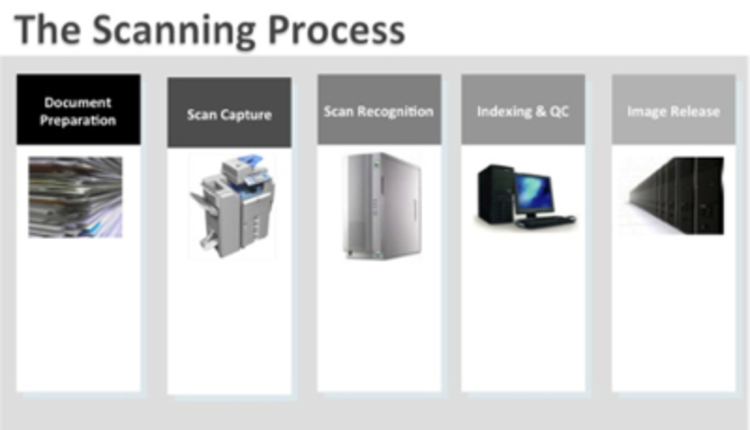
Why process innovation and paperless technology? Paperless technologies, such as scanning, capture, recognition, digital signature, electronic content management (ECM), workflow and retention/disposition,... View More
SharePoint has come a long way since its earliest incarnation. What started as a way to improve on file- sharing technology has evolved into one with a complex and powerful collaboration environment. With... View More
Email addresses remain the cornerstone of electronic communications. Therefore, gathering these addresses and then, the effective, responsible use of them is key to successfully making email a part of... View More
Enterprise architects looking to help their business improve the customer experience must realize the potential of document output for customer communications management (DOCCM). While savings from DOCCM... View More
After 12 years, it’s finally happening. Life insurance companies are embracing e-signatures. It’s been a long time coming, but a few factors have helped spur the recent growth. Low interest... View More
The age-old story of finding the right one never gets old, does it? Along with our rights to “Life, Liberty, and the pursuit of Happiness,” it seems a human condition to chase the seemingly... View More
One of the things I hear over and over is that information capture is a challenge due to the magnitude of information creation. We create information at an astounding rate and store it with the expectation... View More
The importance of your business strategy—where and how you serve your markets—is clear. What’s not so clear is why some organizations are able to harness their vision to deliver real... View More
A customer communication is rarely just a document. It is a claim being paid, a benefit being explained, a disclosure that has to be exactly right. It is the moment a person decides whether the organi
How might highly regulated organizations maintain a competitive edge while balancing rising customer expectations with strict adherence to regulatory requirements?
There is a conversation happening in boardrooms and compliance offices across financial services, insurance, healthcare and utilities that tends to start with regulation and end with obligation. Organ